Climb into a Texas attic in July and you’ll probably see it: that pink, yellow or white fluffy stuff laid between the beams. That’s batt insulation, the most common insulation in American homes. It’s cheap, easy to find and easy to install. The catch is that it’s just as easy to get wrong, and a Texas attic punishes sloppy work fast. This guide explains what batt insulation is, how it works, where it shines, where it falls short, and what to check before you trust it with your power bill.
What Is Batt Insulation?
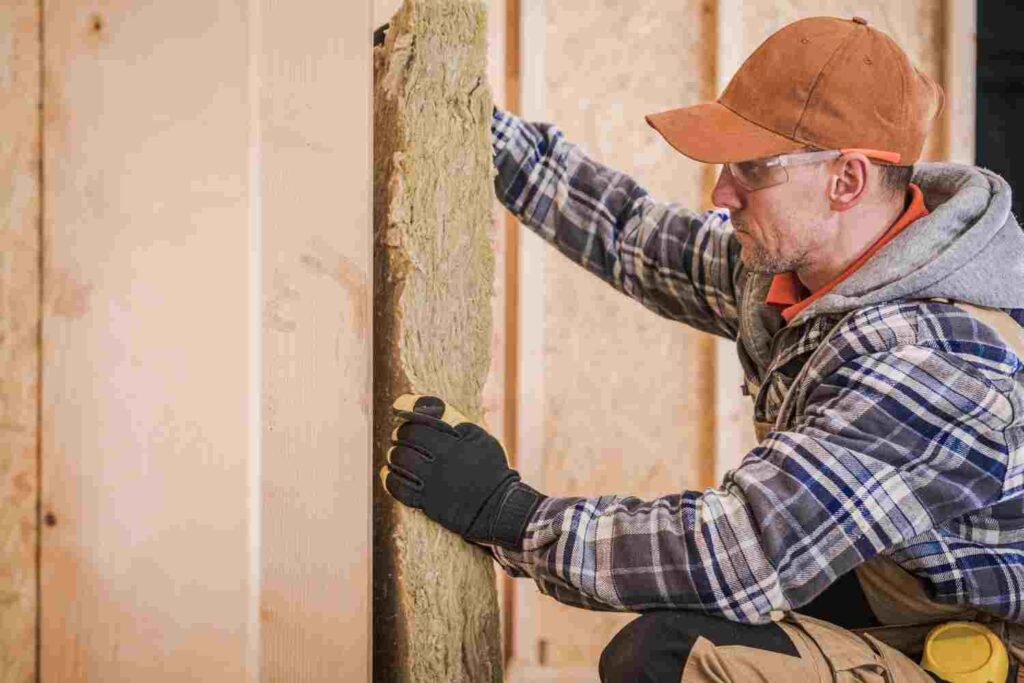
Batt insulation is pre-cut, blanket-style insulation made from flexible fibers, usually fiberglass or mineral wool. It comes in standard widths made to fit between wall studs, ceiling joists and floor joists. Labels and contractors sometimes say “batts insulation” or “blanket insulation,” and they mean the same product..
The word “batt” just means a piece of fiber batting, like the stuffing in a quilt. Batts are cut to length and sold in flat pieces. Rolls are the same material, rolled up in one long strip. Batts suit standard framing with few obstacles, while rolls are handy for long, open runs.
How Does Batt Insulation Work?
The fibers have thousands of tiny pockets of air within them. This means that they reduce heat transfer. Since the air is still the heat cannot move through the air easily. The more dense and thick the batt the more it will resist heat transfer. This is what the R-value will tell you.
This is probably the bit that most guides miss. Batts do not fully insulate your home. Think of a woolly blanket over your bed with the window slightly open. You will be warmer than if you don’t have one, but you will still feel drafts. The air can easily get through around, behind and through any gaps, seams and cut outs in the batts. The R value given on the packaging assumes the batt is filling the space completely with no gaps or compression. This rarely happens in real attics.
What Are Batts Made Of?
Fiberglass is what you’ll find most often, though it isn’t your only pick.
|
Type |
Typical R-value per inch |
Good to know |
|
Fiberglass |
About 3.1 to 3.4 (high-density up to about 4.3) |
The most common and usually the cheapest. Can itch, so wear protection. |
|
Mineral wool (rock or slag wool) |
About 3.0 to 3.3 |
Denser and handles fire and sound well. Costs more. |
|
Cotton (recycled denim or cotton) |
Roughly similar to fiberglass |
Less irritating to handle, harder to find and pricier. |
R-values vary by brand and density, so always check the label.
Faced vs Unfaced Batts
Faced batts have a paper or foil layer on one side that acts as a vapor retarder, which slows moisture moving through. Unfaced batts are just the fiber. In most Texas attics and walls, a facing goes toward the conditioned living space, but follow the manufacturer’s instructions, and ask a pro if you’re unsure. If batts will be left exposed, check that the facing is rated for it, because plain paper facing can burn.
What R-Value Do You Need in Texas?
Most of Texas sits in the hot climate zones, mainly zones 2 and 3, so heat coming down from the attic is your biggest enemy. ENERGY STAR recommends roughly R-30 to R-60 for attics in most of the state, and many builders and local codes aim for about R-38 to R-49. Your local requirements can differ, so check with your city or the Texas State Energy Conservation Office before a big project.
|
Where |
Typical batt thickness |
Typical R-value |
|
2×4 wall |
About 3.5 inches |
R-13 |
|
2×6 wall |
About 5.5 inches |
R-19 to R-21 |
|
Attic floor |
10 to 14 inches or more, often in layers |
R-30 to R-49 |
Don’t guess in the attic. Grab a ruler and measure the depth, then compare it with what you need. For a deeper look at what R-value means, the Department of Energy’s Energy Saver insulation page breaks it down.
Where Do Batts Work Best in Texas Homes?
Batts shine when the space is open, regular and dry. That covers a lot of ground:
- Wall cavities in new construction and remodels, when the studs are exposed
- Open attic floors with evenly spaced joists and few obstacles
- Floors above crawl spaces or garages. Wondering about the floor over a crawl space? Here’s how crawl space insulation affects your energy bills
- Interior walls where you want to dampen sound between rooms
- Tight budgets, when the job is simple and accessible
Where Do Batts Fall Short in Texas?
Batts struggle wherever air, moisture or odd shapes get involved. In Texas, that’s a lot of attics.
- Attics with ducts and lots of cutouts. Cutting batts around ductwork, wiring and recessed lights leaves gaps, and those gaps matter more than the R-value on the label.
- Humid or wet conditions. Wet batts lose performance and can hold moisture. A roof leak after a hailstorm can ruin them quietly.
- Odd or tight spaces. Corners, rafters at angles and crowded framing are hard to fit well.
- Air leaks. Batts don’t seal. Seal the air leaks before anything goes on top, whichever type of insulation you choose.
- Pests. Rodents can nest in or chew through batts, especially in attics and crawl spaces.
Why Installation Matters More Than the Label
A batt is only as good as its fit. Squeeze a thick batt into a thin space and it loses R-value. Leave a gap along a stud, and heat finds it. Fold it over a wire instead of splitting it, and you’ve made a thin spot. A few small mistakes can quietly cut the performance of the whole attic, which is why two houses with the same “R-19” can feel completely different.
A good install means cutting batts to fit, filling the full depth without compressing, working around wires instead of crushing them, and sealing air leaks first. It’s also why many Texans end up asking a pro to look things over. Not sure where yours is coming up short? Our insulation inspection can pinpoint the weak spots.
Batt vs Blown-In vs Spray Foam in Texas
|
Batts |
Blown-in |
Spray foam |
|
|
Upfront cost |
Low |
Low to medium |
Highest |
|
Air sealing |
Poor |
Fair |
Excellent |
|
Fits odd spaces |
Fair |
Good |
Excellent |
|
Handles moisture |
Weak when wet |
Weak when wet |
Open-cell does not stop vapor; closed-cell does |
|
DIY friendly |
Yes |
Sometimes |
No |
|
Best fit |
Open walls, simple attic floors |
Open attic floors |
Attic roof decks, leaky or odd spaces |
For an open attic floor, blown-in often beats batts because it fills around obstacles, so read our post on blown-in insulation. For a leaky attic with ducts in it, spray foam on the roof deck changes the whole picture. See platinum vs traditional insulation for the side-by-side.
How Much Does Batt Insulation Cost?
Batt insulation is one of the cheapest options. Texas cost guides commonly list fiberglass batts at roughly $0.80 to $2.00 per square foot installed, with wider ranges in some guides. Materials alone cost less if you DIY. These are ballpark figures. Your price depends on thickness, access, whether old insulation must come out, and whether air sealing is included. Get a written quote so you know what’s covered.
How Do You Install Batt Insulation?
For a small, simple job, a handy homeowner can do this. Follow the product’s instructions, and wear gloves, long sleeves, eye protection and a mask. Fiberglass irritates skin and lungs.
- Check for problems first. Fix roof leaks, and look for moisture, mold or pests before covering anything.
- Seal air leaks. Caulk or foam gaps around wires, pipes and the attic hatch.
- Measure the space. Note the depth and the framing spacing.
- Cut to fit. Use a sharp utility knife and a straightedge. Cut batts a little snug, not tight.
- Place them without squishing. The batt should fill the cavity fully, with no gaps and no folds.
- Split around wires. Slice the batt so it lays around cables, not over them.
- Mind the facing. Point it toward the living space unless the instructions say otherwise.
- Keep it clear. Leave space around recessed lights and flues as the manufacturer directs.
How Can You Tell If Your Current Batts Are Still Doing Their Job?
Grab a flashlight and head up to the attic. Signs of trouble include:
- Batts that look flat, matted or sagging
- Dark, damp or stained spots, usually under a leak
- Gaps along the joists or around the edges
- Droppings, nests or chewed insulation
- Uneven depth from one area to another
- A room that’s always hotter than the rest
Wet, moldy or pest-damaged insulation usually needs to be pulled out and replaced. Unsure whether yours has crossed that line? Our post on signs you need professional insulation removal walks you through it.
How Long Does Batt Insulation Last?
Dry, undisturbed batts can last for decades, but there’s no single number. The lifespan depends on moisture, pests, how well it was installed and how much it has settled or gotten squashed. A roof leak or a rodent nest can ruin batts in a year, while a dry, well-fitted attic may stay fine for a long time. Check them every few years, especially after storms.
Common Batt Insulation Mistakes
- Compressing batts to make them fit
- Skipping air sealing before insulating
- Installing over a roof leak or damp spot
- Leaving gaps around framing and wiring
- Blocking vents or covering recessed lights without the right clearance
- Using faced batts the wrong way around
Frequently Asked Questions
What is batt insulation made of?
Mostly fiberglass, but also mineral wool and recycled cotton. Fiberglass is the most common and the cheapest.
Is batt insulation good for Texas attics?
It can work on open attic floors with simple framing and good air sealing. In attics full of ducts and cutouts, blown-in or spray foam usually does better.
How are batts different from roll insulation?
They’re the same material in different shapes. Batts are pre-cut pieces for standard framing. Rolls are long strips for open runs.
What’s the difference between faced and unfaced batts?
Faced batts have a paper or foil layer that slows moisture. Unfaced batts are plain fiber. Which one you need depends on where they go and the manufacturer’s instructions.
Can I install batt insulation myself?
Yes, for small, simple jobs with the right protective gear. Bigger or more complicated projects are worth handing to a pro.
Does wet batt insulation still work?
Not well. Once insulation gets wet, it stops working well, and mold can move in. Fix the leak first, then replace the damaged batts.
Is batt insulation fireproof?
The fibers themselves are non-combustible, but the paper facing can burn. Follow the manufacturer’s rules, especially for exposed batts.
How can I tell if my house needs more insulation?
Measure the depth in your attic, look for gaps and damage, and notice any rooms that never feel right. An inspection can give you a clear answer.
Not sure what’s in your attic? Platinum Spray Foam Insulation can look at your batts, tell you what’s working and what isn’t, and give you a written quote for any fixes. We work with homeowners all over Texas, including Ennis, Waxahachie, Kaufman, Rockwall, Athens and Gun Barrel City. Take a look at our batts insulation service, reach out here or call (214) 240-8322.